
Eben Esterhuizen, a financial news analyst and writer for The Panelist, asks the question of the month: is this the end of the commodity bull run? History suggests that commodity prices will move lower if the US enters a recession, and historical evidence also rejects the notion that emerging market growth will continue to support commodity prices during a US recession.

Equity benchmark indices Sensex and Nifty bounced back on Thursday to close higher by nearly 1 per cent on gains in banking, IT and auto shares amid mixed global trends. The 30-share BSE Sensex rose by 443.19 points or 0.86 per cent to settle at 52,265.72. During the day, it rallied 694.26 points or 1.33 per cent to 52,516.79. The NSE Nifty advanced 143.35 points or 0.93 per cent to 15,556.65.

'As the Indian economy continues to expand over the next three years, mid- and small-caps should do well as they have higher exposure to the domestic economy than large-caps.'

Exports had recovered in November to grow at 0.59 per cent from a 12 per cent contraction in October.

The International Monetary Fund (IMF) has said India and China will account for half of the global economic growth in 2023, as the multilateral agency retained its growth forecast for Asia's third-largest economy for 2023-24 (FY24). "India remains a bright spot. Together with China, it will account for half of global growth this year, versus just a tenth for the US and euro area combined," the IMF said in its latest update to the biannual World Economic Outlook. Growth in India is set to decline from 6.8 per cent in 2022 (FY23) to 6.1 per cent in 2023 (FY24) before picking up to 6.8 per cent in 2024 (FY25), the global lender said while citing "resilient domestic demand despite external headwinds".
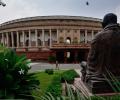
The government on Monday said that matters regarding Chinese intrusion can't be discussed in Parliament as it concerns the security of the country.

2023 could be another volatile year for Indian equity markets, according to BofA. In a report, the brokerage pointed out that the Nifty50, at present, is trading at 20.7x against its long-term average of 18.8x one-year forward earnings of current Nifty constituents. Plus, India is trading at a 98 per cent premium to its emerging market (EM) peers against its long-term average of 45 per cent.

India offers policy stability, transparency and consultative process of governance to incubate investment, Finance Minister Nirmala Sitharaman said on Thursday as she invited investments in prospecting energy resources in the country. Stressing that there is a need for investments in coal, she said, "We need greater investments also to help in gasification of coal. I invite all of you to energetically participate in the (sixth round of commercial mines) auction processes which have been launched today and keep your options also further extended for greater extraction of minerals in India." During this 'Amrit Kaal', India needs all the basic minerals as the country is in the process of rapid growth, she added.

'India has the potential to do a lot more to take advantage of the time today where we stand to gain, geopolitically and in terms of market attractiveness.'

After clocking losses for seven straight quarters, Tata Motors on Wednesday posted a consolidated net profit of Rs 3,043 crore in the third quarter (Q3) of 2022-23. This came on the back of a strong order book, better semiconductor chip supply, tempered commodity prices, and a better product mix. "We remain cautiously optimistic about the demand situation, notwithstanding the global uncertainty.

The Indian economy is likely to grow at over 7 per cent in the current fiscal year, former Niti Aayog vice chairman Arvind Panagariya said on Wednesday, while observing that the growth rate should sustain next year too provided the forthcoming Budget does not have any negative surprises. Panagariya further said recessionary fears have been around for a while but so far neither the US nor the EU has gone into recession. "From the viewpoint of India, in terms of headwinds originating abroad, the worst is probably behind us," he told PTI.

The question is: Will the company have a strong balance sheet to support this massive investment plan?

Aided by the $57.8-billion merger of HDFC Bank and HDFC, India Inc reported its highest ever mergers and acquisitions in calendar 2022 at $171 billion as against deals worth $145 billion announced last year. The acquisition by the Adani group across cement, media and ports dominated the headlines with the conglomerate making its foray into the cement sector by buying Swiss materials firm Holcim's stake in Ambuja Cements for $6.5 billion. The Adani family's additional $4-billion open offer for Ambuja did not get a response because shareholders preferred to stay invested with the new owner.

Gold, the safest haven amid the ongoing uncertainty, also emerged as one of the most lucrative investment options in financial year 2022-23 with an impressive return of 16.1 per cent in rupee terms, and 2.3 per cent returns in dollars. And, had it not been for the very high inflow of smuggled gold and the huge discount prevailing in the market due to high prices, the returns in gold would have been much higher, analysts said. The precious metal has consistently been delivering positive returns in India since 2016.

'Markets could face uncertainty in the short to medium term.' 'It would be prudent to invest in alternative asset classes, especially debt, for about a year.' 'Bank fixed deposits are offering rates as high as 9 per cent per annum and these can be used as a great hedging tool until equity markets stabilise.'

As a percentage contributor to nominal GDP, PFCE's share was 60.1 per cent in FY23, compared with 59.6 per cent and 60.8 per cent in the two preceding fiscal years. "Although PFCE is expected to grow 7.7 per cent in FY23, we believe it is still short of a broad-based recovery. "The current consumption demand is highly skewed in favour of goods and services consumed largely by the households falling in the upper income bracket. "A broad-based consumption recovery, therefore, is still some distance away," said Sunil Kumar Sinha, principal economist with India Ratings.

The Centre has garnered around Rs 2,500-3,000 crore in the first five weeks after it imposed a windfall tax on oil and gas companies for the export of fuel, Business Standard has learnt. It is likely that the government will continue with the one-time tax till the Indian crude basket is above $80 a barrel, sources said. The next review of the windfall tax on oil companies is early next week.

The rupee weakened by 14 paise to close at a new lifetime low of 79.59 against the US dollar on Tuesday as a strong greenback overseas and persistent foreign fund outflows continued to weigh on investor sentiment. This comes a day after the RBI announced measures for international trade settlement in rupees. At the interbank forex market, the local unit opened weak at 79.55 against the greenback and witnessed an intra-day high of 79.53 and a low of 79.66.

The second wave of COVID-19 may have a more lasting damage on the Indian economy and exports will once again be the foundation for recovery, Moody's Analytics said on Monday. In its report titled 'APAC Economic Outlook: The Delta Roadblock', Moody's Analytics said social distancing is weighing on the current quarter, but economic recovery will resume by the year-end. The Delta variant of COVID-19 is among factors now adversely affecting economies of the Asia-Pacific (APAC) region, but the economic hit from the current round of movement restrictions in the region will not be as severe as the recessions in the second quarter of last year.

The currency market won't care for our moans, groans, cries and sighs. The rupee will find its own level, explains Tamal Bandyopadhyay.

The migration of people to developed countries fell in the wake of the global economic crisis, as many of these nations saw lower demand for labour, according to the OECD.

The need for finding options for proper functioning of Parliament is of paramount importance as the frequency of the passage of Budgets and other economic Bills without discussion or debate has only increased in the last few years, notes A K Bhattacharya.

India's exports entered negative territory after a gap of about two years, declining sharply by 16.65 per cent to $29.78 billion in October, mainly due to global demand slowdown, even as trade deficit widened to $26.91 billion, according to data released by the commerce ministry on Tuesday. Key export sectors, including gems and jewellery, engineering, petroleum products, ready-made garments of all textiles, chemicals, pharma, marine products, and leather, recorded negative growth during October. Imports during the month under review rose by about 6 per cent to $56.69 billion on account of increase in the inbound shipments of crude oil and certain raw materials such as cotton, fertiliser and machinery.

End users should take the plunge despite higher home loan rates as these tend to be cyclical.

The information technology (IT) services industry could see value investors taking selective punts in the near future. While growth remains visible, managements across the board have been cautious or measured in their guidance and have also complained about a combination of margin pressures and high churn. The two factors are related in that employee compensation is a large component of IT costs and high churn has forced firms to hike compensation packages and also invest more in hiring, training, and retention.

Equity benchmarks fell sharply on Thursday in line with an extremely weak trend in the global markets, with the Sensex plunging 1,154.78 points in early trade. Persistent foreign fund outflows and a spurt in crude oil prices also dampened sentiment. The 30-share BSE benchmark was trading 1,154.78 points lower at 53,053.75. The broader NSE Nifty tumbled 335.65 points to 15,904.65.

The Indian economy recovered from the Covid-induced downturn during 2022 and is poised for further improvement in the coming quarters though downside risks emanating from geopolitical tensions, strengthening dollar and elevated inflation will continue. The positive trajectory in the growth trend and improved fundamentals will help the nation in neutralising the impact of global headwinds which are expected to have a bearing on the country's exports in the months to come. The challenges before the government and the Reserve Bank in the new year would be to arrest inflation, check declining value of rupee against US dollar and promote private investment and growth, with a view to ensure that the country remains one the fastest growing major economies of the world.

Stock market investors are expecting a balanced Budget with a focus on job creation, increased spending on infrastructure, reigning in the deficit, and bringing the economy back on track, experts said on Wednesday. Stock markets have been subdued in the run-up to the Union Budget with BSE's benchmark Sensex is almost flat so far this month. Even the corporate earning season failed to excite the markets, while some indices like IT and bankex have seen some positive movements.

Given the prevailing uncertainties, investors must maintain a 10-15 per cent allocation to gold in 2023.

The government has decided to postpone the release of the new Foreign Trade Policy (FTP) and extend the existing one by six months on account of global uncertainties and currency fluctuations. The government was scheduled to announce the new FTP by the end of September. The current policy was to end on September 30.

The 2023 edition of the Indian Premier League (IPL) will see Disney-Star and Viacom18 competing to sell their ad space with an eye on the estimated Rs 4,000-crore advertising money.
Worst affected were the countries of euro zone, which saw a loss of $10.9 trn

The police have discovered several cases of professionals who have suffered major salary cuts begging on the streets at night to supplement their falling incomes from day jobs. One woman in the east Midlands town of Leicester admitted that she begged at night after her office job, so that she could pay for a new kitchen in her flat.

'You may see some movement indicating a simpler tax regime with less exemptions but with fewer tax rates making life simpler for taxpayers.'

The joint report by UN Economic Commission for Europe and the UN Food and Agriculture Organisation released on Tuesday said that consumption, production and trade of forest products reached record highs in 2006, with a slight downturn registered in 2007. That decline accelerated in 2008, marking the sharpest drop since the first oil shock of 1973, and continued into the first half of this year, it said.
Despite the ups and downs, the home financier is able to sustain its spreads and report the same loan growth Q-o-Q; so predictable that analysts sometimes find it boring.
Union Commerce and Industry Minister Anand Sharma said that India has been less affected by the current global economic crisis due to the economy's strong fundamentals.

More than 6,000 centres with headcounts of 10-100 have downed shutters across the country.
The Migration Advisory Committee said 270,000 less posts should be on the 'shortage list' of jobs, which allows employers to bring in foreign workers without trying to fill them with British staff first. In the latest review published on Thursday, construction workers and quantity surveyors were suspended from the list because unemployment among workers in those professions has risen by 500 per cent as a result of the downturn.
The recession put the brakes on some of the most ambitious skyscrapers ever conceived.
